Virtual Military & Veterans Wall of Honor
Herman C. Wallace
Herman C. Wallace
Herman C. Wallace
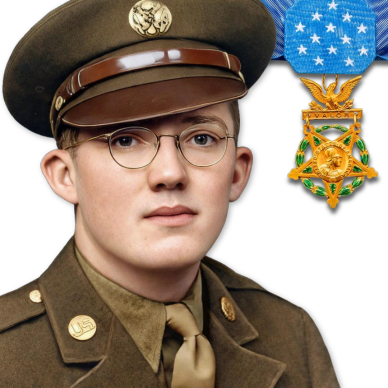
Medal of Honor - World War II
Private First Class - U.S. Army
Wallace was born on June 12, 1924, in Marlow, Oklahoma. He graduated from Lubbock High School in Lubbock, Texas, in 1942 and enrolled as an engineering major at Texas Technological College (now Texas Tech University) later that year. He joined the Army from Lubbock in June 1943, and by February 27, 1945, was serving as a Private First Class in Company B, 301st Engineer Combat Battalion, 76th Infantry Division. On that day, during demining operations near Prümzurlay in western Germany, Wallace stepped on an S-mine. Knowing that if he tried to run away, the mine would pop up and explode a few feet off the ground, thus endangering the soldiers near him, he deliberately remained standing on the mine until it detonated. Wallace was killed in the explosion, but the blast was confined to the ground, and no other soldiers were injured. He was posthumously awarded the Medal of Honor eight months later, on October 25, 1945.
Learn more about Wallace at this link.
John Keith Wells
Herman C. Wallace
Herman C. Wallace
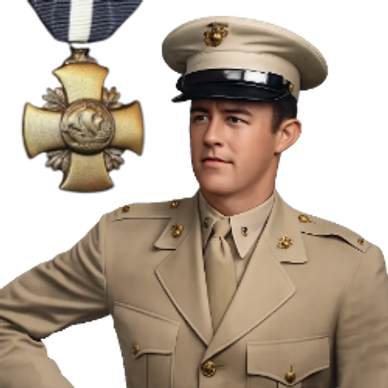
Navy Cross - World War II
Major - USMC
Wells (February 5, 1922 – February 11, 2016) was a United States Marine Corps officer best known for commanding 3rd Platoon, Easy Company, 2nd Battalion, 28th Marines, the unit that raised the first American flag atop Mount Suribachi during the Battle of Iwo Jima in World War II. His platoon became one of the most decorated to emerge from a single engagement in the Pacific theater.
Born in north Texas, Wells attended Texas A&M College before joining the Marine Corps in 1942. After completing Officer Candidate School and parachute training, he served with the 1st Marine Regiment on Guadalcanal. He later assumed command of 3rd Platoon, Easy Company.
During the assault on Mount Suribachi, Wells earned the Navy Cross for extraordinary heroism, credited with contributing to the destruction of numerous Japanese positions. Wounded in the fighting, he briefly evacuated to a hospital ship but returned to his platoon shortly after the initial flag raising. He remained on Iwo Jima until the island was secured. After the war, Wells earned a degree in Petroleum Geology from Texas Tech and was honorarily retired as a Major in the Marine Corps Reserve. He authored a memoir, Give Me 50 Marines Not Afraid to Die: Iwo Jima. Wells died in 2016 at the age of 94.
Learn more about Wells at the links below:
Ross Ayers
Herman C. Wallace
George H. O'Brian, Jr.
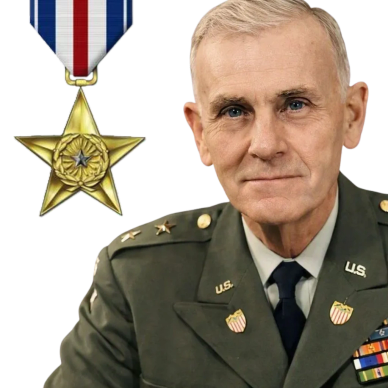
Silver Star - World War II
Major General - Texas Army National Guard
Major General James F. Ayers, the first Adjutant General of Texas, served with distinction from 1969 to 1973. Born in Westminster in 1910, he was a Texas Tech graduate who began his military career in 1931 with the 36th Infantry Division. During World War II, Ayers earned the Silver Star for his gallantry at the Salerno beachhead and later fought at Monte Cassino and in the Vosges Mountains. After the war, he rose through the Texas National Guard, commanding key artillery units and later the 36th Infantry Brigade. Appointed Adjutant General in 1969, he became the state’s senior uniformed officer and was brevetted to Lieutenant General by Governor Preston Smith. Ayers’ honors included the Silver Star, Legion of Merit, Bronze Star, and the Lone Star Distinguished Service Medal. A proud Texas Tech alumnus, he was also inducted into the university’s Athletic Hall of Fame. He retired in 1973 and passed away on September 1, 2001.
To learn more about Ayers, visit the links below:
George H. O'Brian, Jr.
George H. O'Brian, Jr.
George H. O'Brian, Jr.
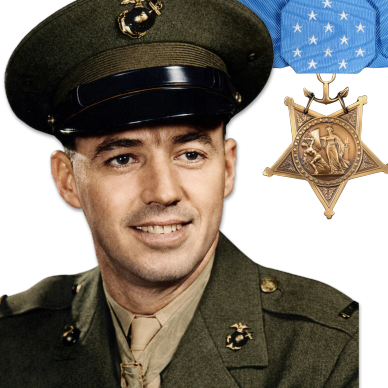
Medal of Honor - Korea
Major - USMC
O’Brien was born on September 10, 1926, in Fort Worth, Texas. He graduated from Big Spring High School in 1944 and soon afterward served as a seaman in the United States Merchant Marine from December 1944 to May 1946. Following his service, he enrolled at Texas Technological College (now Texas Tech University), earning a Bachelor of Science in geology in May 1950. During his time as a student, he enlisted in the United States Marine Corps Reserve as a private in July 1949. He was ordered to active duty on November 27, 1951, and entered Officer Candidate School at Quantico, Virginia. After completing OCS in February 1952, he proceeded to the Basic Course, graduating in August of that year. Additional training at Camp Pendleton, California, prepared him for deployment, and he sailed for Korea in September 1952 to join the 1st Marine Division. By October 27, 1952, O’Brien was serving as a Second Lieutenant with Company H, 3rd Battalion, 7th Marines. On that day, despite being wounded by enemy fire, he led the assault that secured a strategically important enemy‑held hill. His extraordinary courage earned him the Medal of Honor, presented by President Dwight D. Eisenhower at the White House exactly one year later, on October 27, 1953. O’Brien continued his service in the Marine Corps Reserve and was promoted to Major in 1963. After leaving military service, he returned to West Texas, raised a family, and remained deeply involved in veteran support, volunteering regularly at the Big Spring Veterans Administration Medical Center. O’Brien passed away on March 11, 2005, in Midland, Texas. He was laid to rest in the Texas State Cemetery in Austin.
Learn more about O'Brien at the links below:
Richard Edward Cavazos
George H. O'Brian, Jr.
Richard Edward Cavazos
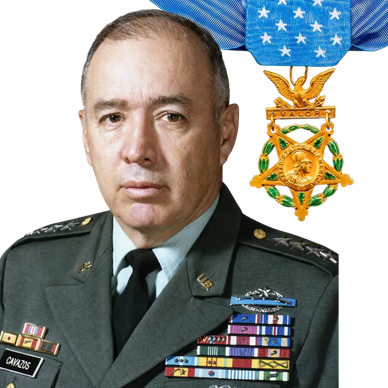
Medal of Honor - Vietnam
General - U.S. Army
Richard Edward Cavazos, a Mexican-American, was born on 31 January 1929 in Kingsville, TX. He graduated from the North Texas Agricultural College (now the University of Texas at Arlington) ROTC program in 1949. He then earned a Bachelor of Science degree in Geology from Texas Technological College (now Texas Tech University) in 1951, where he played on the football team and was a distinguished graduate of the ROTC program. He attended the Basic Infantry Officer Course at the U.S. Army Infantry Center at Fort Benning, GA, followed by training at U.S. Army Airborne School. He received further military education at the U.S. Army Command and Staff College, the British Army Staff College, the Armed Forces Staff College, and the U.S. Army War College.
Learn more about Cavazos at the links below:
Lee Roy Herron
George H. O'Brian, Jr.
Richard Edward Cavazos
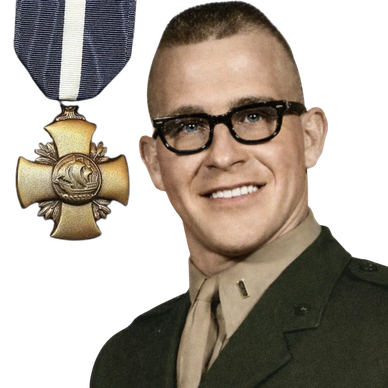
Navy Cross - Vietnam
First Lieutenant - USMC
Lee Roy Herron was born on June 8, 1945, and grew up in Lubbock, Texas. He graduated from Lubbock High School in 1963 and from Texas Tech University in 1967, earning numerous academic awards during his educational career. While he attended TTU, he was a member of the Platoon Leaders Class and spent his summers training at Quantico, Virginia. After college, he attended the Vietnamese Language School at the Presidio in California. He arrived in Vietnam on December 30, 1968, and was the executive officer of Company A, 1st Battalion, 9th Marines. On February 22, 1969, his company came under intense enemy fire while on patrol north of the Ashau Valley. They were quickly pinned down by machine gun, mortar, and rocket fire. During the battle, Herron charged a bunker and killed the North Vietnamese inside; he was assaulting a second bunker when he was killed by an enemy sniper. For his actions, he was posthumously awarded the Navy Cross, a Purple Heart, the National DefenseMedal, the Vietnamese Service Medal with one star, and the Vietnamese Campaign Medal.
Learn more about Herron at the links below:
- A Veteran’s 30-Year Journey to Learn About a Friend Killed During the Vietnam War
- Techsans in the Vietnam War: Profile
- Marine keeps Vietnam hero's memory alive, 50 years later
- On the Marine Corps' Birthday, Honoring Lubbock's Lee Roy Herron, an Ordinary Miracle
- Faith Under Fire: Solving the Mystery of a Combat Photo
- Houston attorney David Nelson reflects on his service and the meaning of Veterans Day
Alfred L. Kincer III
Alfred L. Kincer III
Alfred L. Kincer III
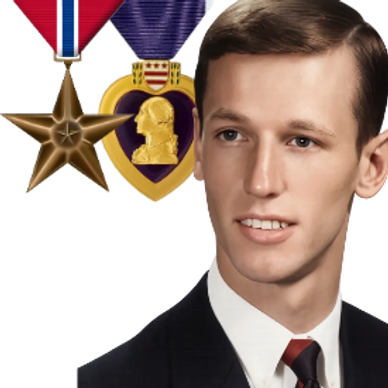
Bronze Star & Purple Heart - Vietnam
First Lieutenant - U.S. Army
Participated in specialized workshops designed to enhance leadership skills and boost career potential for military-connected individuals. Alfred Lemuel Kincer III was born on December 12, 1946, in San Antonio, Bexar County, Texas. He was the son of Alfred Lemuel Kincer Jr. and Elizabeth M. Lucas Kincer. Kincer was a native of San Antonio and attended Texas Tech University, where he was a classmate and ROTC classmate of future U.S. Army General Robert Clark. He was also a superb athlete and a loyal friend, remembered by peers for his integrity and courage. Kincer joined the United States Army Reserve during the Vietnam War. He was commissioned as a First Lieutenant in the 5th Infantry Division, 3rd Squadron, 5th Cavalry Regiment, serving as a tank unit commander for the 3rd Platoon, A Troop. His service began on September 11, 1970. On March 1, 1971, while serving in Quang Tri Province, South Vietnam, near Khe Sanh Airfield, Kincer was killed in action during an attack on a night position about 8 km north-northeast of the airfield. The cause of death was wounds from an explosive device during a hostile ground attack. He died in a military medical facility before being buried. Kincer was posthumously awarded the Purple Heart and the Bronze Star (Merit) for his service and sacrifice. His name is inscribed on the Vietnam Veterans Memorial in Washington, D.C., at Panel 04W, Line 14. He is buried at Fort Sam Houston National Cemetery in San Antonio, Texas. His death deeply affected his family and friends, and he is remembered as a courageous young officer who gave his life in service to his country during one of the most challenging periods in U.S. history.
To learn more about Kincer, visit the links below:
Rick D. Husband
Alfred L. Kincer III
Alfred L. Kincer III
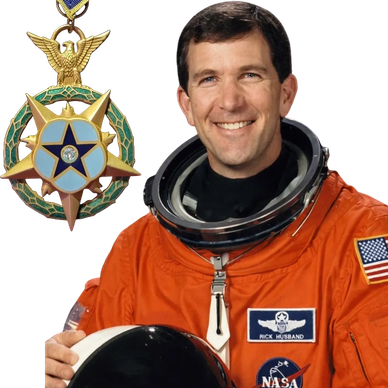
Congressional Space Medal - STS-107
Colonel - U.S. Air Force
Colonel Rick D. Husband distinguished himself as an astronaut, an officer in the U.S. Air Force, and the Commander of the STS-107 crew on board the Space Shuttle Columbia. His meritorious and dedicated service to the Nation and his contributions to human space flight are a credit to him, to his family, and to his country. Colonel Husband was a pilot on STS-96 Discovery (1999), a 10-day mission that included the first docking with the International Space Station. He returned to space as crew commander of STS-107 Columbia (2003), a 16-day science and research mission. He and six crewmates perished when Columbia broke apart during re-entry over Texas, 16 minutes before the scheduled landing.
Learn more about Husband at the links below:
Steve Morin, Jr.
Alfred L. Kincer III
Steve Morin, Jr.
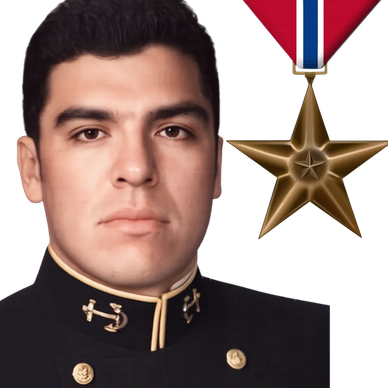
Bronze Star - Iraq
Staff Sergeant - Texas Army National Guard
From the time he finished high school, SSgt. Steve Morin Jr. made serving in the military his career. He was a first-generation Texas Tech University graduate, a father, son, husband, U.S Navy veteran, and U.S Army National Guard Sergeant. He enlisted in the Navy after graduating high school in his hometown of Brownfield, Texas, at age 17. By the time he reached age 34, Morin had devoted 14 years to the Navy, served in the National Guard for two years, and planned to attend Officer Candidate School. Assigned to the Army National Guard's 111th Engineer Battalion, 36th Infantry Division in Mineral Wells, he was only 34 years old when he was killed by an improvised explosive device on September 28, 2005, west of Umm Qasr, Iraq. He was awarded the Bronze Star for his service in Iraq. Sergeant Morin was a true Texas Tech fan and represented Texas Tech proudly even while deployed. While in the Navy, he met his wife, Gwendolyn Michelle Morin. Both worked for a photo company while attending Texas Tech University. Steve went on to earn a degree in economics and another in finance with honors. The couple married in 1999 in Brownfield. Sergeant Morin was planning to enter Officer Candidate School when he was called up for duty in Iraq. In addition to his wife, he left behind a son, Esteban, a daughter, Brianna, a sister, Leticia, a brother, Javier Jay, and parents Steve and Audrey Morin of Brownfield.
To learn more about Morin, visit the links below:
Troy L. Gilbert
Joshua Stewart Meadows
Steve Morin, Jr.
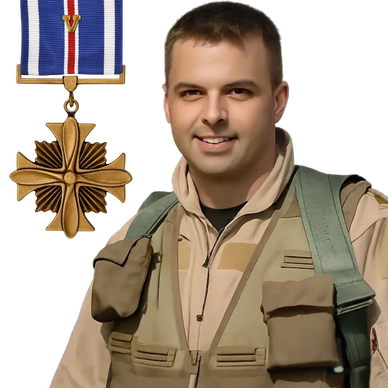
Distinguished Flying Cross w/ Valor - Iraq
Major - U.S Air Force
Troy Gilbert's life epitomized the core value of Service before Self. Whether flying the F-16, spending time with his family, or helping with a church function, he gave unselfishly of himself to serve and protect others. Such was the case on Nov. 27, 2006, the day Major Gilbert was killed in action protecting others. The 12-year Air Force veteran was assigned to the 332nd Air Expeditionary Wing at Balad Air Base, Iraq. He had already completed 21 combat sorties in the F-16 supporting ground forces under enemy fire. On one mission, he found and identified anti-Iraqi forces, then passed critical targeting information to coalition forces, who attacked and eliminated the threat. In another time-sensitive mission, Major Gilbert destroyed 10 insurgents concealed in a palm grove with the pinpoint delivery of a laser-guided weapon. On the day he died, Major Gilbert heroically led a flight of two F-16s in an aerial combat mission near Taji, Iraq. On the ground, insurgents were unleashing truck-mounted heavy machine guns, rocket-propelled grenades, small arms fire, and mortars to attack coalition troops. In addition, a downed Army helicopter crew was in danger of being overrun. Engaging the enemy meant certain anti-aircraft fire for Major Gilbert, but despite the danger, he went after the insurgents. He launched a strafing attack against the truck, destroying it with his 20-millimeter Gatling gun. Despite enemy fire, Major Gilbert continued to press the insurgents with a second strafing pass at extreme low-level to help save the lives of the helicopter crew and other ground forces. He lost his life on that strafing pass when his aircraft hit the ground. Major Gilbert's final act of moral and physical courage was conducted selflessly, just as he had always lived his life. He has been posthumously awarded the Distinguished Flying Cross with Valor.
To learn more about Gilbert and his family, visit the links below:
Darryn Deen Andrews
Joshua Stewart Meadows
Joshua Stewart Meadows
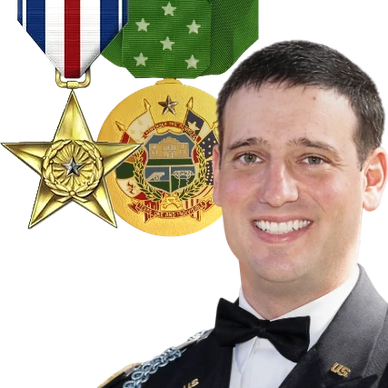
Silver Star & TX Legislative Medal of Honor - Afghanistan
Second Lieutenant - U.S Army
Born in Ogden, Utah, on July 3, 1975, Darryn Andrews grew up in Cameron and graduated from C.H. Yoe High School, where he played on the football, baseball, and basketball teams, served on the student council, and participated in the UIL one-act play competition; he went on to earn a bachelor’s degree in business from Texas Tech University and a master’s degree in education administration from Texas State University. Ever since he was a child, Lieutenant Andrews had hoped to serve his nation with the same dedication with which his grandfather had served during World War II, and after the events of 9/11, he tried three times to enlist; the first two attempts were ended by medical problems, but on his third attempt, he was accepted, and in 2004, he proudly joined the U.S.A Army, intending to make the military his career. Assigned to the 1st Battalion, 501st Parachute Infantry Regiment, 4th Brigade Combat Team (Airborne), 25th Infantry Division, out of Fort Richardson, Alaska, Lieutenant Andrews was serving his second tour of duty in Afghanistan in September 2009 when his unit was attacked with an improvised explosive device and a rocket-propelled grenade; with no thought for his own safety, Lieutenant Andrews tackled three of his comrades to protect them from being hit; he died of the wounds he incurred in that act of selfless courage. Through his patriotism and determination to serve his country, Lieutenant Andrews had already distinguished himself as an exemplary soldier, but in the end it was his willingness to sacrifice himself for his brothers-in-arms that revealed his true heroism and showed the strength of his warrior’s heart. That the 83rd Legislature of the State of Texas hereby directs the governor of the State of Texas to posthumously award the Texas Legislative Medal of Honor to Second Lieutenant Darryn Deen Andrews in recognition of his valiant service during Operation Enduring Freedom.
To learn more about Andrews, visit the links below:
Joshua Stewart Meadows
Joshua Stewart Meadows
Joshua Stewart Meadows
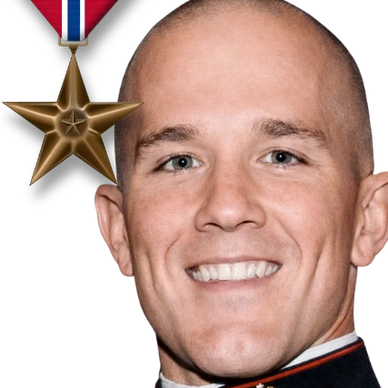
Bronze Star - Afghanistan
Captain - USMC
For heroic achievement in connection with combat operations against the enemy while serving as Joint Tactical Air Controller, Marine Special Operations Team 8113, Marine Special Operations Company A, 1st Marine Special Operations Battalion, United States Marine Corps Forces, Special Operations Command in support of Operation ENDURING FREEDOM. On 5 September 2009, while on a combat reconnaissance patrol in central Farah province, Afghanistan, Marine Special Operations Team 8113 came under heavy enemy mortar, rocket-propelled grenade, and automatic weapons fire. Captain Meadows dismounted his vehicle and, under heavy enemy resistance, cleared a compound in the northern section of the village and immediately gained a position of advantage on the roof. Under intense volumes of enemy fire, he sprang to action with complete disregard for his own safety. Exposing himself twice to intense automatic and precision fires, he neutralized two enemy fighters and marked his position for supporting arms to locate. With his position still in receipt of effective enemy fires, Captain Meadows was mortally wounded when he fearlessly exposed himself to provide suppressive fires, enabling fellow Marines to maneuver on and destroy the well-fortified enemy. By his extraordinary guidance, zealous initiative, and total dedication to duty, Captain Meadows reflected great credit upon himself and upheld the highest traditions of the Marine Corps and the United States Naval Service.
To learn more about Meadows, visit the links below:
Samuel B. "Sam" Cornelius

Purple Heart & Air Medal - Vietnam
Major - U.S. Air Force
Maj. Samuel Blackmar “Sam” Cornelius (April 2, 1943 – June 16, 1973) was a United States Air Force pilot who served during the Vietnam War and is remembered as a missing in action (MIA) airman. Cornelius was born in State College, Pennsylvania, to Mary Pascal and Henry Cornelius. His family moved to Spearman, Texas, in 1957, where he graduated from Spearman High School in 1961. He played football for four years at Spearman High and earned a scholarship to Texas Tech, where he played for the Red Raiders for four more years. He was awarded the Del Morgan Courage Award and played in two Sun Bowl games. Cornelius joined the U.S. Air Force on May 25, 1967, completing Undergraduate Pilot Training at Reese Air Force Base in Lubbock, Texas. Commissioned as a Second Lieutenant, he advanced to the F-4 Phantom II and was married to Lynda Kilchrist in 1967, with whom he had two children, Leslie (1970) and Doug (1973). He completed two tours to Southeast Asia, returning home safely. In early 1973, he was assigned to the 366th Tactical Fighter Squadron (TFS), 4th Tactical Fighter Wing at Seymour Johnson AFB, North Carolina, and later sent to Ubon Royal Thai Air Force Base, Thailand, where he flew bombing missions into Laos and Cambodia. On June 16, 1973, Cornelius was the pilot of an F-4E Phantom II (tail number 67-00374, call sign “Wolf 07”) on a forward air controller mission over Cambodia. The lead aircraft was tasked with marking an enemy-controlled bridge for other planes. While maneuvering to do so, the Phantom was hit by hostile fire and crashed. His weapons systems officer, Capt. John Jackie Smallwood, was in the back seat. The wingman reported seeing no ejections and no rescue beeper signals. Search and rescue was hampered by enemy forces in the area, and both airmen were declared MIA. Cornelius was promoted to Major while in MIA status. He is memorialized on the Courts of the Missing at the National Memorial Cemetery of the Pacific and on the Vietnam Veterans Memorial Wall in Washington, D.C. His case remains in the U.S. Department of Defense’s Active Pursuit category. Cornelius is remembered for his service, dedication, and sacrifice for his country.
To learn more about Cornelius, visit the links below: